Don’t Be the Hero, Be the Guide
What I Learned from Donald Miller’s Small Business Flight Plan and Building a StoryBrand
Most small business owners make themselves the hero of their story swooping in to save the day.After all, if you’re not the hero, you must be the villain, right?But your customer doesn’t want to be rescued. They want to be seen.
Luckily, there’s a third option: be the guide, the person who knows the path, who’s been through the fight, and who exists to help others reach their goal.
Think of Obi-Wan Kenobi and Luke Skywalker.Haymitch and Katniss.Glinda and Dorothy.They all share one thing: experience without ego.
A true guide leads with both authority and empathy strong enough to direct, but humble enough to listen.
The Difference Between a Hero and a Guide
Heroes need the spotlight.Guides create it for others.
Heroes talk about their victories.Guides talk about what they’ve learned through failure.
Heroes chase validation.Guides build trust.
If you want to build a business that lasts, you have to learn to step out of the spotlight and focus it on your customer.Because the truth is your customer doesn’t need saving.They need understanding.
Be Authoritative, But Stay Humble
Authority doesn’t mean dominance. It means confidence built through consistency.You already know your craft, that's your strength. But the real mark of authority is knowing where your knowledge ends.
If something falls outside your lane, don’t be afraid to “send Luke to Yoda.”The Jedi Council wasn’t respected because everyone knew everything; it was respected because they trusted each other’s strengths.
Real authority builds community, not control.That’s how you earn the kind of respect that turns customers into advocates.
Lead With Empathy, Not Pity
Empathy is the second half of the guide equation and it’s what separates real connection from performance.
When your audience struggles, they don’t want a sermon or a slogan. They want to know you’ve been there.
Let’s say someone’s sink has been leaking for weeks. They’re busy, tired, maybe embarrassed they haven’t fixed it yet.When you step in as the empathetic guide, you don’t just fix the sink, you relieve the guilt.You teach them how to prevent it next time. You give them peace of mind.
Empathy builds loyalty faster than any sale ever will.
The Guide’s Responsibility: Listening First
Every great story starts with a problem, not a pitch.
Before you offer your solution, take the time to understand why your customer is looking for help.This is where storytelling and leadership intersect, listening becomes your strategy.
Let’s look at our example: Jane Doe, a 22-year-old college senior about to graduate.
Her problem isn’t that she needs a restaurant reservation.Her real problem is that she wants a space that honors the years she spent working toward this milestone where her family can celebrate the person she’s become.
If you’re that restaurant, your job isn’t just to sell a meal it’s to understand why this moment matters.You’re not creating a transaction; you’re creating a chapter in her story.
The Guide’s Process: Show, Don’t Steal
Once you understand your hero’s journey, your next step is to make the path visible not take the journey for them.
Give them a plan that’s clear, simple, and direct.
“Graduation season seats are limited. Make a reservation now and celebrate your success.”
That’s your call to action. It’s confident but not pushy.It respects their agency while showing the way forward.
Then, like any good guide, you clarify the stakes:If she waits too long, the opportunity disappears.That’s tension, not fear.And when she acts, she gets the reward: her family around the table, her story fulfilled.
The Internal Work of a Guide
Being the guide means building a business on humility and curiosity.It means caring more about your customer’s outcome than your own applause.It’s a mindset that demands restraint, the ability to hold your expertise lightly, to teach instead of show off, to help instead of headline.
It’s harder than being the hero, because the guide has to live what they preach.But it’s also more rewarding, because every success becomes shared.
That’s the secret Donald Miller taps into when you reposition your business as the guide, you stop chasing validation and start creating transformation.
Recommended Reading
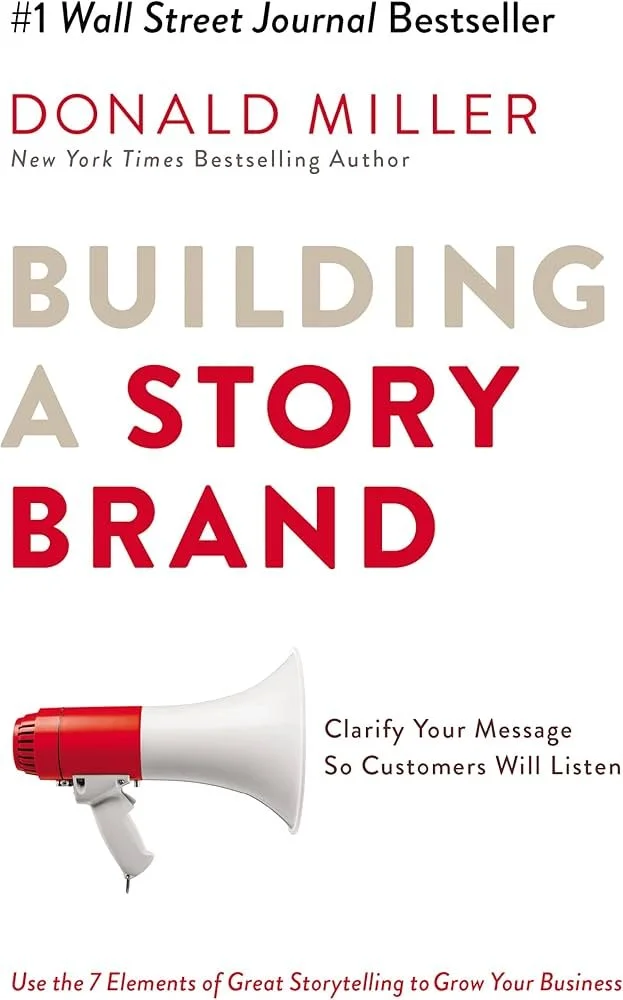
This blog was inspired by the work of Donald Miller, author of Building a StoryBrand and Business Made Simple: The Small Business Flight Plan.His approach to brand storytelling reframes how we think about marketing, reminding us that our job isn’t to be the hero, but the guide who helps our customers win their story.
If you want to dive deeper into this mindset, both books are excellent starting points:
These frameworks have shaped how we think about storytelling at Snowbird Studios: practical, empathetic, and focused on helping real people achieve real results.
Your Challenge This Week
Every great story needs a guide not a hero with all the answers, but someone who listens, understands, and leads with clarity.
This week, rewrite one piece of your marketing about your About page, a caption, even a flyer with your customer as the hero and your business as the guide.
Watch how the tone shifts.It’s quieter.It’s clearer.And it’s more powerful.
If you ever want to talk through how to guide your audience more effectively, we’re always here.Contact@Snowbird-Studios.com
What Slow Season Teaches You About Content
Every business hits a slow season. Maybe it’s after the holidays, or maybe it’s when the weather turns. Whatever the reason, things quiet down and that can feel uncomfortable.
But the slow season isn’t a marketing problem.
It’s a production opportunity.
When business slows down, you finally have the one thing you never have during your busy months: time. And that time can be used to plan, shoot, and build content that keeps your brand visible all year long.
At Snowbird Studios, we treat slow seasons like pre-production. It’s when we plan our clients’ shoots, refine their messaging, and capture the kind of timeless visuals that keep audiences engaged well beyond the moment.
1. Batch Film Evergreen Stories
This is the perfect time to tell stories that will always matter to your audience.
Show what makes your business tick—your process, your people, or the values that drive you.
These pieces don’t age quickly, which makes them the foundation of your content library. A great evergreen story today can still be relevant a year from now.
2. Capture Timeless Visuals
Don’t wait until you’re busy again to think about visuals. Film or photograph your space, your team, or your products in ways that can be reused year-round.
Seasonal shoots can be fun, but evergreen visuals give you flexibility when things get hectic later.
“Slow season isn’t downtime it’s your most valuable planning window. Producers use this time to build what everyone else will rush to create later.”
Snowbird Studios Production Team
3. Build Consistency
Slow months are your chance to get ahead.
One well-planned production day can give you weeks—sometimes months—of content. That means when business ramps up again, your social media doesn’t fall behind.
You stay consistent, visible, and professional without scrambling. That’s what separates the businesses people remember from the ones that disappear between seasons.
The Bottom Line
Slow season isn’t a sign to stop creating it’s an invitation to prepare.
The businesses that keep showing up through content and storytelling are the ones people remember when it’s time to buy again.
If you’re ready to use your slow season to build something lasting, Snowbird Studios can help you plan, shoot, and produce content that keeps your business moving forward all year long.
Weekly Challenge: Plan Your Content Day
This week, look at your calendar and pick one day to focus purely on content creation.
It doesn’t need to be a full production, just capture something that tells your story.
Here are three easy options:
Record a short clip of your team doing what they do best.
Photograph a product, dish, or service from a fresh angle.
Write down three stories or moments you’ve never shared before.
Think of this as your content warm-up. The goal isn’t perfection, it's momentum.
By the time the busy season rolls around, you’ll already have the rhythm of a producer.
How to Think Like a Media Producer (Even If You’re Not One)
How to use a producer’s mindset to scale your business content.
Have you ever gone to the movies and wondered why the producer’s name is always so high up in the credits? What does a producer actually do and what could that possibly have to do with your small business?
More than you think.
If you’re a small business owner, you are the producer of your brand. You pull the strings that make everything happen from scheduling to budgets to communication. Even if you delegate tasks, you’re still the one responsible for making sure they’re done. The producer doesn’t just manage logistics and money they also protect the creative vision and the studio’s business goals. In other words, they balance creativity with ROI.
And that’s exactly what you need to do when creating content for your business.
1. Start With the Goal
Before any camera turns on, ask:What am I trying to achieve?
Your goal determines everything: the message, the format, and the platform.
If your goal is simply to tell customers about a holiday closure, a photo or text post will do the job.
If your goal is to increase sales for a specific product or service, then you’ll want to build a content plan that focuses attention and emotion around that offer.
Once your goal is set, meet your audience where they already are.For example, promoting a new cocktail on Snapchat might get you views — but not customers, since many viewers there may be under 21. Meanwhile, Instagram Reels or TikTok, where your target demographic actually spends time, could drive real engagement and sales.
Thinking like a producer means connecting goal → audience → platform before you ever create the content.
2. Manage the Logistics
Producers are masters of organization.Content creation is no different.
Even if you’re a one-person team, put every creative task on your calendar and treat it like an appointment with your business. I personally recommend using Google Calendar: estimate how long each task will take, color-code it, and move it if you must, but don’t skip it.
Next, set your budget.Even “free” content has costs your time, your employees’ time, and your energy. Know what you’re investing, and if you plan to boost or promote posts, include that in your budget too.
Lastly, think about your cast and crew.Who needs to be involved with you, your general manager, a barista, a server, a client? Make sure they know your “media day” schedule and show up ready. If you’re shooting all day, plan for lunch, rest breaks, and locations. It might sound obvious, but the smallest logistical oversights can derail an entire day of production.
Time is the one resource you can’t recover so protect it with planning.
3. Schedule and Release With Intention
Don’t drop all your content at once.That’s not strategy, that's noise.
Space your releases intentionally.
Plan a mix of selling, informing, and connecting content:
Selling posts highlight products or services.
Informing posts share updates, tips, or education.
Connecting posts builds community and personality.
Consistency builds trust. For example, this blog goes out every Monday giving readers a chance to learn something new and apply it throughout the week. Whether your rhythm is weekly, twice a week, or daily, keep it steady. Most platforms (and third-party schedulers) make it easy to pre-schedule posts so you can stay consistent without constant manual work.
4. Analyze What Actually Matters
This is where many creators lose focus.
Producers don’t judge a film by applause; they look at ticket sales, reviews, and return on investment. In the same way, likes and follows are not the real measure of success.
Define your own Key Performance Indicators (KPIs) based on what your content is meant to do:
Did it reduce customer confusion? Did it bring in more inquiries?Did it improve retention?Did it boost sales of a product?
These are real outcomes that tie directly to your business goals. When you measure this way, content creation feels meaningful because you can see how it moves the needle.
Weekly Challenge: Step Into the Producer’s Chair
This week, take one piece of your marketing and give it a producer’s structure:
Goal: What’s the purpose of this post?
Audience: Who’s it for?
Logistics: When and where will it be created?
Measure: How will you know it worked?
Write these answers down before you create anything.Every great film starts with a plan your content should too.
Conclusion: Produce Your Brand With Purpose
Thinking like a media producer isn’t about having a film crew or a massive budget it’s about clarity, structure, and purpose. When you plan your content the way a producer plans a shoot, you make every post work harder for your brand.
Remember:
Set goals that actually support your business.
Protect your time through logistics.
Release content with intention, not impulse.
Measure what really matters — results, not reactions.
If you ever get stuck or want to talk through your content strategy, we’re always happy to help small businesses think like producers.You can reach us anytime at Contact@Snowbird-Studios.com no pressure, just a conversation about how to make your story work harder for you.